Building a UX team inside a 100+ person IBM and Red Hat launch
Lightwell is IBM and Red Hat's AI security product. It finds and fixes weak spots in the open source code that most software is built on, and more than 100 people across both companies build it. I lead its UX team. I wrote the staffing plan, set how the team runs, and kept UX aligned across the two companies.
The problem
One designer on my team carried Lightwell's UX through its first launch. After that launch, the program grew past 100 people across two companies. UX had to keep pace with engineering, so I had to grow the team while the program scaled around it.
What I did
- I wrote the staffing plan and made the case for it to leadership.
- I kept the team out of long analysis cycles: ship a first version for each launch, then improve it.
- I set a rule that people from partner teams join for a fixed period with an end date, so we never drain another team's capacity.
- I kept UX's part of the program lined up with engineering, product, technical marketing, and business teams at both companies.
- I set up the team so day-to-day decisions don't wait on me. The design lead and designers make the design calls.
Read the diagram as text
- Lightwell UX sits at the center of the program.
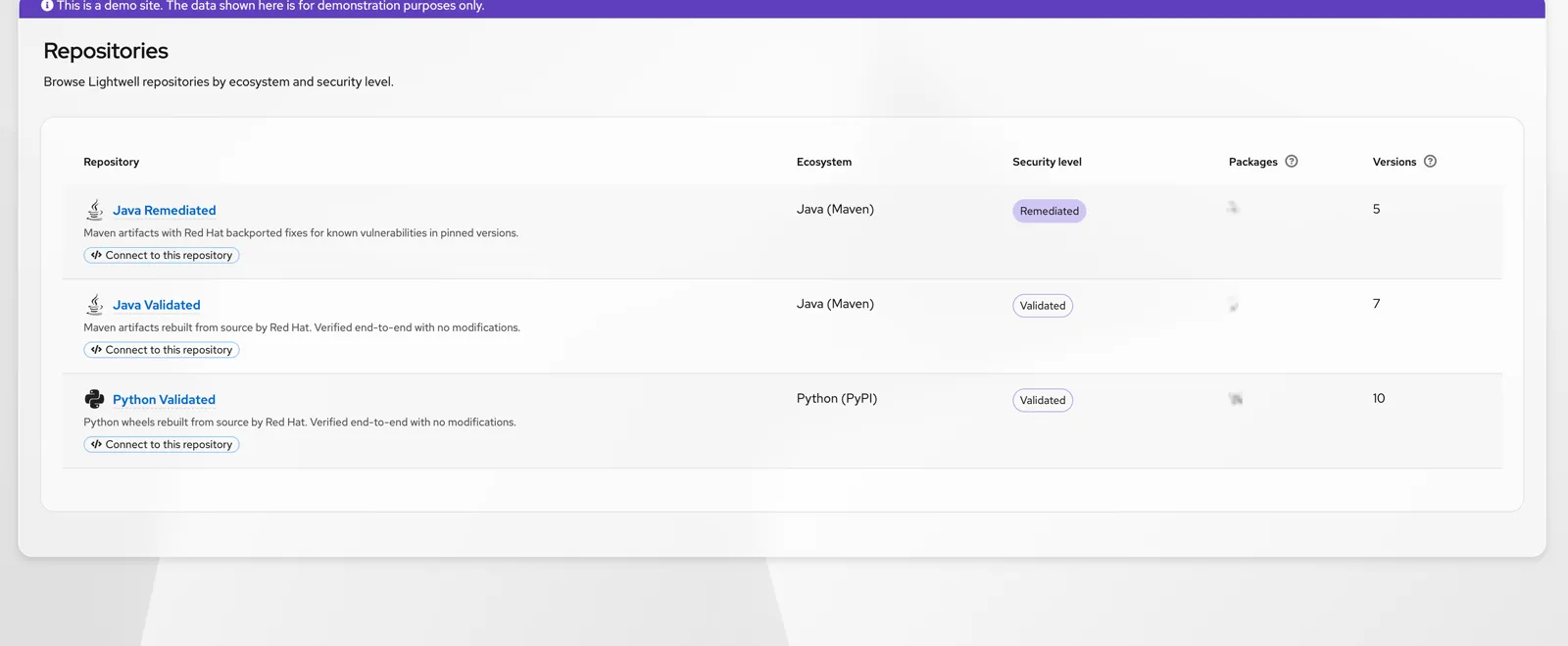
- It works with four partner groups, each with people from IBM and Red Hat: engineering, product, technical marketing, and business.
What the team did
The team designed the Lightwell Network, which went live at launch on July 8, and the Clearinghouse, which launched October 6.
The team also designed an interactive demo that follows one security flaw from detection to a deployed fix across several Red Hat products. A presenter can run it in five minutes, or go several layers deeper for a technical audience. It runs on a laptop, and Red Hat used it to prepare for its Summit Connect keynotes. I co-led it with a UX architect, who built the interactive walkthrough.
What the team decided
The team started by defining five types of Lightwell users, from security leaders to the developers who install packages, and recruited research participants to match.
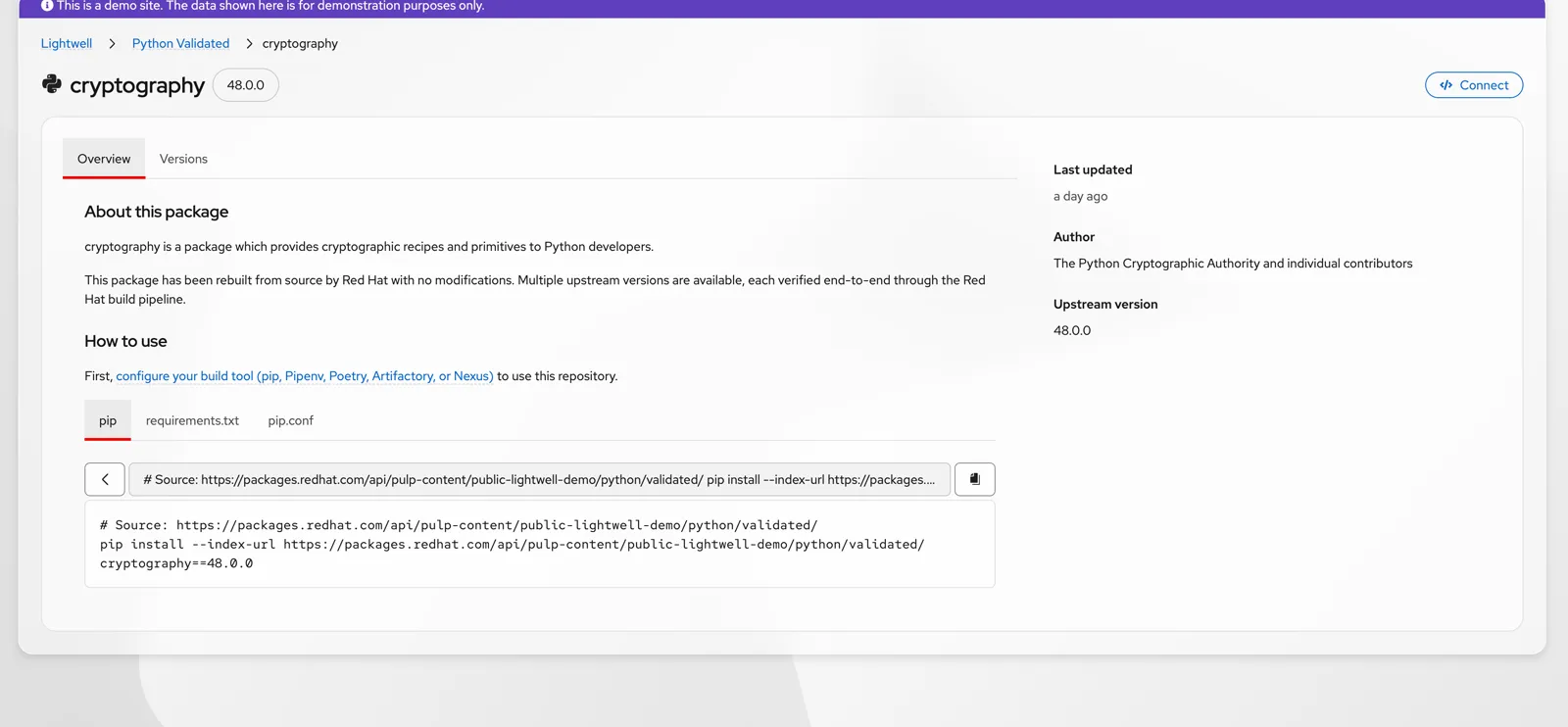
- Keep one access model. Lightwell offers two kinds of packages: ones with security fixes added, and ones rebuilt and verified as they are. The team considered giving each kind its own access level and decided against it, so customers manage one set of permissions.
- Follow what testing showed. In early testing, people preferred messages inside the page over pop-ups that interrupt their work. The team built reusable in-page messages (banners, callouts, and alerts) and added them to the shared design system, so other teams can use them too.
- Fix the page frame. Pages had layout problems, including two scroll bars at once. The team traced them to the design system's page frame and convinced engineering to move from side navigation to navigation across the top. That change fixed the problem at its source.
Result
The team shipped two launches in 90 days: the Network in July and the Clearinghouse in October. The designer who carried the first launch now leads the team's design. Red Hat's VP of Technical Marketing called the demo the clearest cross-product demo they'd been part of at Red Hat.
About Lightwell
Attackers now use AI to find weak spots in open source code, the shared, freely available code that most software is built on. Lightwell uses AI to find and fix those weak spots, including in older versions that companies still run.
IBM and Red Hat backed it with a $5 billion commitment and more than 20,000 engineers. Eleven banks and payment networks joined as early collaborators: Bank of America, BNY, Citi, Goldman Sachs, JPMorganChase, Mastercard, Morgan Stanley, Royal Bank of Canada, State Street, Visa, and Wells Fargo.
The two companies announced it on May 28, 2026, and launched it six weeks later, on July 8. The Lightwell Network went live with a catalog of 6,500+ open source components with security fixes applied. On October 6, they launched the Lightwell Clearinghouse and announced fixes for 400+ security flaws in Java code that no one had found before.
Read the diagram as text
- May 28, 2026: IBM and Red Hat announce Lightwell.
- July 8, 2026: launch, with the Lightwell Network live.
- October 6, 2026: the Lightwell Clearinghouse launches.