Back to Work
Agentic AI · Case Study

From Doing the Work
to Directing the Agent

There's a difference between using AI to work faster and rethinking which parts of your work humans should be doing at all. I moved a 150+ person design org from the first to the second. Same-day adoption. No mandate.

Org Red Hat UXD · 150+ designers
Timeline Q1 2026
Role UX Manager & AI Strategy
Tools Cursor + Claude + MCP (Jira & Confluence)
cursor — uxd-workspace
Agent
claude-opus · MCP: Jira
Plan a Day of Learning event for UXD in the UXDOPS project. The event will be about using AI and include AI Prototyping and GitOps. Create an Epic with stories for identifying presenters, brainstorming topics, confirming participation, defining formats, scheduling, logistics, communications, and follow-up.
Creating Epic and stories in UXDOPS…
Created in Jira
Epic
UXDOPS-2394
[UXD] Day of Learning — UXD Learning & Presentations Planning
UXDOPS-2395
[UXD] Identify potential presenters for Day of Learning
UXDOPS-2396
[UXD] Brainstorm and finalize AI-focused topics and themes
UXDOPS-2397
[UXD] Reach out to presenters and confirm participation
11 issues created with full descriptions ~45 sec
One paragraph in. Full Epic with 11 stories, acceptance criteria, and descriptions out.
150+
Designers reached in one session
~45 sec
Epic + 11 stories from one paragraph
~5 min
Setup time, no technical experience needed
0
Mandates. Adoption was voluntary.

AI-enabled is not agentic

AI-enabled means you use AI to do your work faster. Agentic means you decide what work is yours to do at all. That's not a subtle distinction. It's a completely different relationship with your tools and your time.

UXD had two problems that both pointed to the same gap. Designers were spending hours on work that had nothing to do with design: formatting Jira tickets, breaking down Epics, writing acceptance criteria at the end of a long week. And they were designing agentic experiences for Red Hat customers without ever having used one themselves.

Strategic
No firsthand agentic fluency
You can't design for what you've never experienced. Red Hat's customers live inside agentic systems. Our designers didn't.
Operational
Too much time on the wrong work
Jira tickets, Epic breakdowns, acceptance criteria. Necessary work, but not design work. And not work that needs a human.

The entry point was Jira, because the pain was real and the demo was immediate. But Jira was just the door in. The real goal was changing how 150 designers think about their own time.
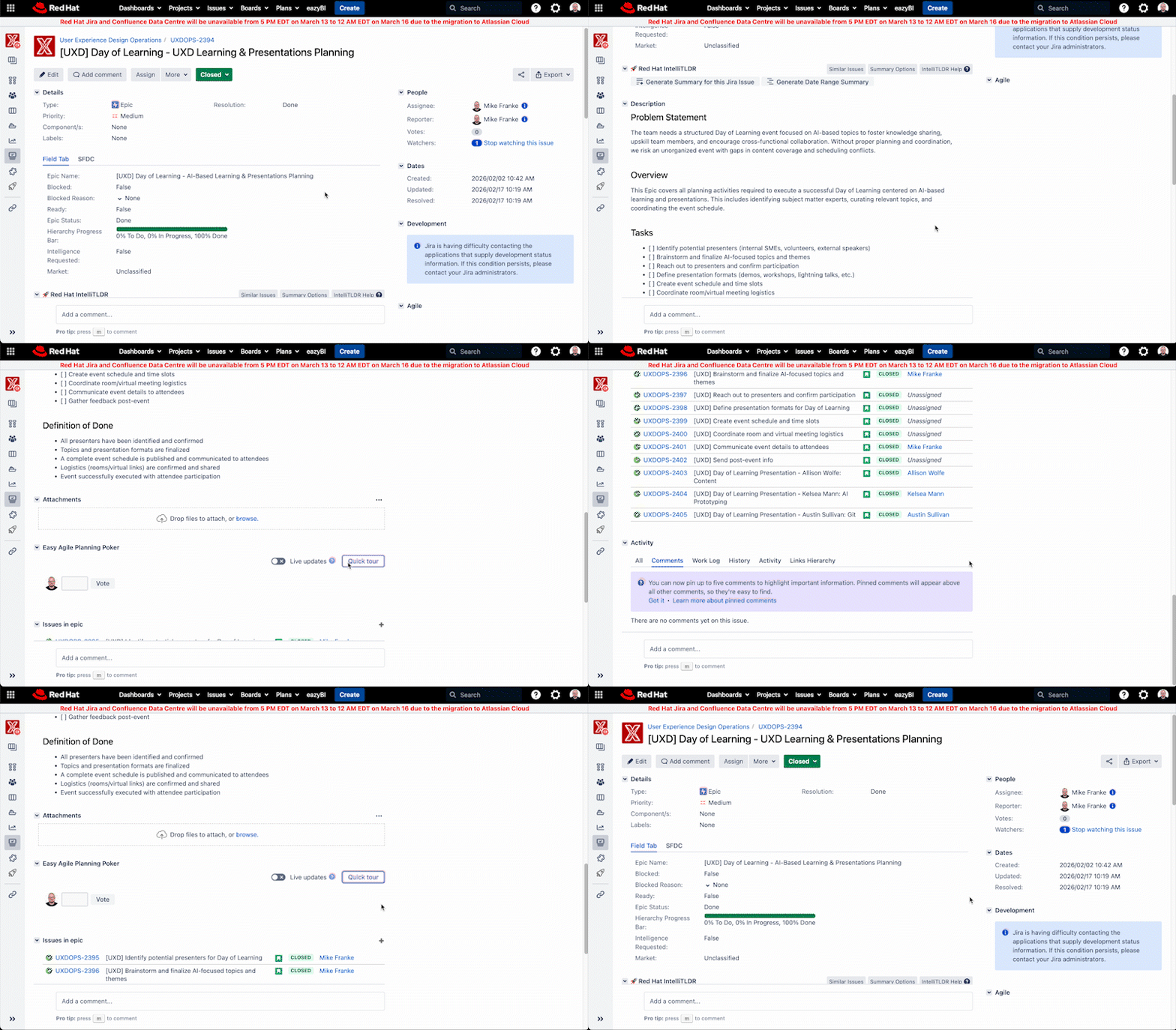
Real output · UXDOPS-2394
Real Jira Epic UXDOPS-2394 created by AI agent in ~45 seconds — Day of Learning UXD Planning
One paragraph typed. Full Epic plus 11 stories created in ~45 seconds, live during the org-wide session.

Built it. Documented it. Taught it.

The goal wasn't to get 150 designers using a new tool. It was to get them asking a new question: "Is this work mine to do, or should my agent handle it?" The agentic Jira workflow was the first concrete answer to that question, and the one most likely to make an immediate difference in someone's actual day.

I built and validated the workflow using Cursor + Claude + MCP (Jira and Confluence), then made it teachable: a Confluence guide written in plain language for non-technical people; a video built around real use cases, not installation steps. Beta tested with my team first. When the feedback was clear, I took it to the full org.

Standards that actually get followed

Every team has ticket standards. Almost no one follows them consistently, not because they don't care, but because remembering a template at 4:30pm on a Friday, ticket seven deep, is just not how humans work.

A Rules file transfers that mental overhead to the agent permanently. Write your team's standards once in plain English. The agent reads it automatically every session, and from that point on, that work is gone. Not reduced. Gone. Every Epic, every story, every required field applied correctly without anyone thinking about it.

Before
Standards exist. Compliance doesn't.
Teams write process docs and ticket templates. Then everyone creates tickets their own way anyway. That inconsistency adds up across every sprint, across a 150+ person org.
After
One file. That labor is gone.
Define the standard once. The agent can't ignore it. Designers stop spending mental energy on ticket hygiene and spend it on design instead.

I built a UXD-specific Rules file and published it on Confluence. Any designer on any team could reclaim that time in under five minutes.

mike-mcp (Workspace)
uxd-jira-ticket-rules.md
Atlassian
mike-mcp
▸ .cursor
▸ archive
▸ guides
▾ jira
jira-field-guide.md
uxd-jira-ticket-rules.md
▸ scripts
▸ cursor-config
jira / uxd-jira-ticket-rules.md
Markdown
1# UXD Jira Ticket Standards
2
3## When This Rule Applies
4
5Follow these standards whenever you create,
6update, or review Jira Epics or Stories for
7any UXD project on Red Hat Jira Cloud.
8
9## Issue Type Hierarchy
10
11- Epics represent a body of design work
12- Stories are individual pieces within an Epic
13- Do NOT create Tasks. Use Stories instead.
14
15## Required Fields — Every Ticket
16
17Project key, Summary, Description, Priority,
18Reporter. Never leave these blank.
Active open Jira tickets
Agent
look up my active open jira tickets
Jira · In Progress (5)
CPUX-001 Zero Trust — Clear path for devs High
CPUX-002 Agentic UX — AI agents in RHEL High
CPUX-003 Telemetry — Subscription mgmt UX High
CPUX-004 SDK — Seamless developer workflow Med
Want me to dig into any of these?
The Rules file lives in your workspace. The agent reads it automatically. No setup per session, no config, no reminders needed.

150 designers. One new question.

On March 17, 2026, I presented to the full 150+ person UXD org. Built around demonstration, not slides. Real prompts, real agent output, live. The goal wasn't teaching a tool. It was getting every person in the room to feel, firsthand, what it's like to hand work off to an agent and watch it disappear from their plate.

The real measure of success: did designers leave asking "What else am I doing manually that my agent could handle?" Managers sharing the deck with their own teams unprompted. Designers setting up independently the same day. No follow-up. No nudges. That's a yes.

"Thank you for showing this to me visually and walking me through it. It provided a real world example I can actually follow."

Why it worked

🎯
Meet people where their pain is
Jira frustration was pre-existing. The agent didn't introduce a new behavior. It eliminated an existing one people already hated. That's the fastest path to adoption.
📹
Show, don't tell
Real prompts, real output, live. Not a vision deck. The format matched the message: agentic AI is tangible, not theoretical.
🍳
Eat your own cooking
The Confluence guide about agentic workflows was written using agentic AI. Credibility comes from practice, not advocacy.
"

Sick! Easiest set up. Thanks!

Sr. UX Designer
Red Hat · posted same day
"

So useful. I shared your slide deck with my team and encouraged them to set up Cursor/Jira if they haven't already.

UXD Manager
Red Hat · shared with her team unprompted
"

I'm up and running with my Jira and Confluence MCP servers and Cursor. Instructions were super straightforward.

Sr. Manager, UX Research
Red Hat · set up independently
Next Case Study
Building an AI-Fluent Design Org →
150+ designers from zero AI adoption to 100% daily usage in under a year
Want to talk AI strategy?
I'd rather have a conversation
than send a deck.
I'm always up for a good conversation about AI adoption, design leadership, or what's next.
📍 Raleigh, NC · Remote friendly
All Work Let's Talk →